
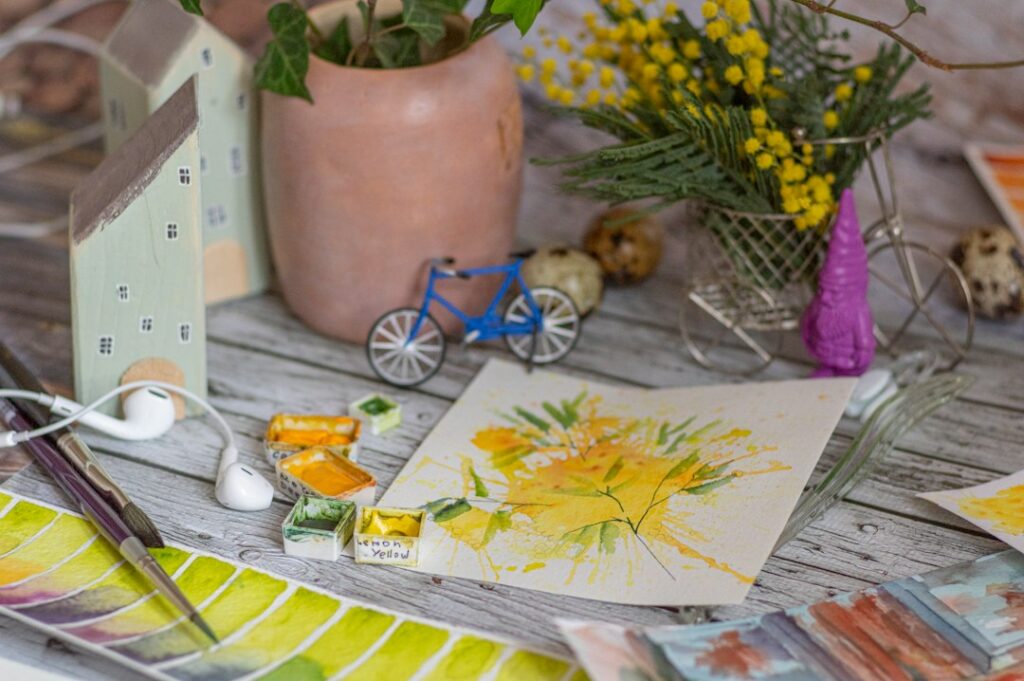
Creative hobbies can support daily enjoyment, social connection, movement, and a sense of purpose for seniors living in assisted living. Activities do not need to be complicated, expensive, or physically demanding. The most successful hobbies usually match a person’s interests, abilities, energy level, and comfort with group participation.
Why do creative hobbies matter in assisted living?
Creative hobbies give residents meaningful ways to use their time and express personal interests. They may also support hand coordination, memory, conversation, confidence, and emotional well-being.
A hobby can be especially helpful during major life changes, such as moving from a private home into assisted living. Familiar activities can create continuity, while new activities offer opportunities to meet neighbors and establish a comfortable routine.
Creative activities may include:
- Making greeting cards or simple decorations
- Painting, drawing, or coloring
- Knitting, crocheting, or weaving
- Gardening in containers
- Writing memories, poetry, or family stories
- Listening to or making music
- Cooking or assembling familiar recipes
- Arranging photographs and keepsakes
- Building simple seasonal crafts
The goal is not to produce perfect artwork. Enjoyment, participation, and personal meaning matter more than the finished result.
Which hobbies are easiest for seniors with limited mobility?
Seated activities with lightweight materials are often the easiest place to begin. A resident may be able to participate at a table, in a lounge chair, or from a wheelchair without needing to move around the room.
Good options include:
- Large-print coloring books
- Watercolor painting with wide-handled brushes
- Collage-making with pre-cut paper
- Sticker art and decorative cards
- Simple beadwork using larger beads
- Folding paper crafts
- Sorting and arranging photographs
- Listening to music while discussing favorite performers or memories
Materials should be placed within easy reach, and the work surface should provide enough room for comfortable arm movement. Non-slip mats, lightweight containers, and adaptive scissors can make participation easier for people with arthritis, weakness, or reduced grip strength.
A hobby should be adjusted rather than abandoned when a resident cannot complete every step independently. For example, someone may choose colors, dictate a message, arrange materials, or direct another person while still taking part in the creative process.
What creative hobbies can support memory and conversation?
Reminiscence-based activities often encourage conversation because they connect creativity with familiar experiences. Residents may enjoy creating a family timeline, labeling old photographs, decorating a memory box, or writing short descriptions of meaningful places and events.
Music is another strong prompt for conversation. Listening to songs from a person’s younger years may lead to stories about dances, work, family traditions, holidays, or local community life. Residents do not need to perform. They might tap along, sing quietly, identify instruments, or share why a particular song matters.
Other memory-friendly activities include:
- Creating a seasonal scrapbook
- Matching photographs with names or events
- Discussing household traditions while preparing a simple recipe
- Decorating cards for family members
- Reading short poems and responding to them
- Making a “favorite things” collage
Instructions should be clear and offered one step at a time. Too many choices or complicated directions can make an activity feel frustrating instead of enjoyable.
Are arts and crafts safe for older adults?
Most arts and crafts can be made safer through proper setup, supervision when needed, and careful material selection. Craft supplies should be easy to handle, free of sharp edges when possible, and suitable for the resident’s vision, coordination, and cognitive abilities.
Common safety considerations include:
- Use battery-operated candles instead of open flames for craft displays.
- Avoid small beads or loose pieces for residents who may place objects in their mouths.
- Choose non-toxic paints, adhesives, and finishes.
- Provide good lighting and high-contrast materials.
- Keep floors and walking paths clear of supplies.
- Avoid strong scents if residents have breathing sensitivities or headaches.
- Use scissors and heated tools only when the resident can manage them safely or has appropriate assistance.
Residents with tremors, vision changes, or limited hand strength may benefit from larger handles, pre-cut materials, magnetic fasteners, or projects that can be completed in short stages. A resident’s care plan and known safety needs should guide activity choices.
How can seasonal conditions affect hobbies in New Castle, PA?
Indoor hobbies are particularly useful during cold, wet, or icy periods when walking outdoors may be uncomfortable or unsafe. Winter can be a good time for indoor gardening projects, photo organizing, music groups, card-making, and family-history writing.
During warmer months, container gardening can bring outdoor activity closer to the building. Raised planters, tabletop herb gardens, and window plants may be more manageable than traditional garden beds. Residents can participate by planting, watering, choosing containers, labeling plants, or observing changes over time.
Seasonal projects may include:
- Spring seed-starting in small containers
- Summer flower arranging
- Autumn leaf collages using dried leaves
- Winter paper snowflakes or holiday cards
- Decorating a shared bulletin board with seasonal artwork

Outdoor activities should account for heat, humidity, rain, uneven ground, and changing daylight. Short sessions with nearby seating are often more practical than extended outings.
What hobbies work well for people with arthritis or reduced dexterity?
Activities can remain enjoyable when they require less pinching, gripping, or repetitive hand motion. Large-handled tools, soft materials, and lightweight objects reduce strain.
Helpful choices include:
- Painting with foam or built-up handles
- Using clay that is soft and easy to shape
- Tearing paper for collages instead of cutting every piece
- Decorating pre-made wooden or cardboard shapes
- Using large yarn and simple looms
- Arranging flowers in lightweight containers
- Making no-sew fleece projects
- Creating digital photo slideshows with assistance
Short sessions may be more comfortable than completing an entire project at once. Rest breaks, a supportive chair, and a neutral wrist position can help reduce discomfort. Pain that persists or worsens should be discussed with a healthcare professional.
How can families participate without taking over?
Family members can support creative hobbies by bringing familiar photographs, recipes, music, fabric samples, or stories. The resident should remain the decision-maker whenever possible.
Instead of completing a project for the resident, a visitor might ask:
- Which color should be used?
- What story belongs with this photograph?
- Who should receive this card?
- Which song should play next?
- Would this project be easier in shorter steps?
A finished item can become a meaningful gift, but the activity itself should not be judged by productivity. Some residents may enjoy displaying their work, while others prefer keeping projects private or giving them to relatives.
How can assisted living communities make hobbies more inclusive?
A well-planned activity offers more than one way to participate. Residents may create, observe, discuss, organize, choose materials, or enjoy the social setting.
An inclusive hobby program usually provides:
- Projects that can be completed in one sitting or over several sessions
- Materials at different levels of difficulty
- Clear instructions in large print
- Adapted tools for vision or dexterity needs
- Quiet alternatives for residents sensitive to noise
- Opportunities for individual and group participation
- Displays that recognize effort without creating pressure
The best hobby is one that feels meaningful and manageable to the individual. A lifelong painter may prefer a structured art project, while someone else may find equal satisfaction in arranging flowers, listening to familiar music, or preparing a family recipe. Creative living in assisted living is less about staying busy and more about preserving choice, identity, connection, and enjoyment in everyday life.
